Standalone ECU Dyno Tuning in Kyle, Texas
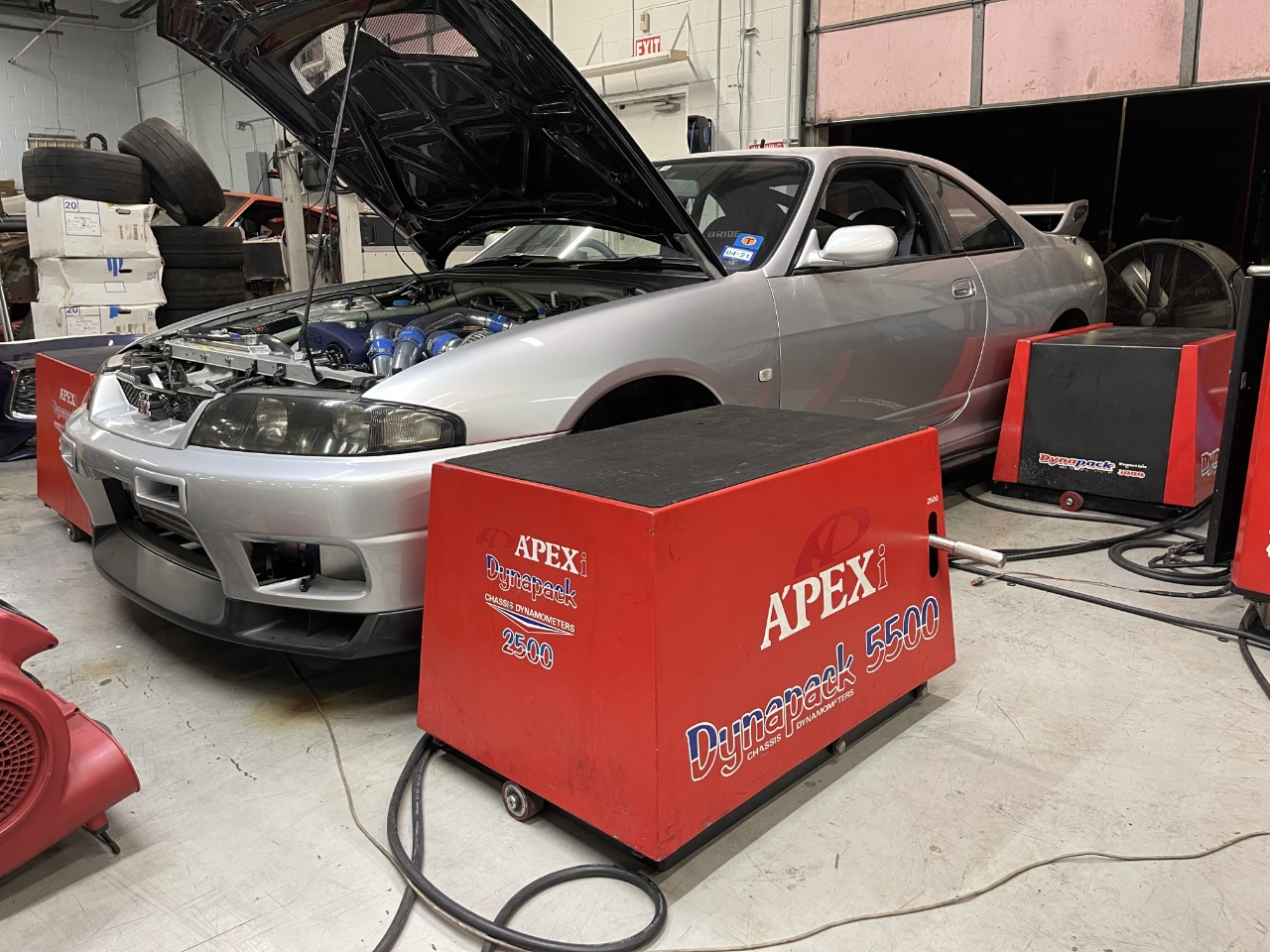
You’re probably thinking: “How does remote-plus-dyno tuning actually work, and is it as good as putting my car on a dyno from start to finish?” Fair question. This page is the long answer. The whole process, start to finish, exactly the way I’d explain it if you were standing in my shop.
First, the short version. I tune any engine running a standalone engine management system. My deepest specialties are Link ECU, Emtron, and Apex’i Power FC. I’m also factory-certified on AEM Infinity and AEM EMS Series 2, and I regularly tune Haltech and Nistune. For most platforms I use a hybrid approach: live, screen-shared remote sessions to get your car wired correctly, running cleanly, and road-ready. Then we finish on my in-house Dynapack AWD hub dyno.
You get real tuning support from the first wiring question all the way through a validated dyno tune, from one tuner who knows your car by the time it hits the dyno.
Whether you’re in Austin, San Antonio, Houston, Dallas, or anywhere in between, this is built so distance stops being the reason your build sits unfinished. By the end you’ll understand what tuning really is, how my process works, what you need on your end, and whether it’s the right fit for your car. No hard sell just how I work now, and why my customers spend less than they would hauling a half-finished car to the shop.
One thing up front, so nobody’s time gets wasted: Bardabe Performance is a tuning shop. I don’t do fabrication, turbo installs, harness wiring, or take in general project cars. I did that for 20 years. I still take on 2 or 3 complete GT-R builds a year but that’s a separate conversation. If your car needs fabrication or assembly work, I’ll point you toward someone good and I’ll be here when it’s ready to tune.
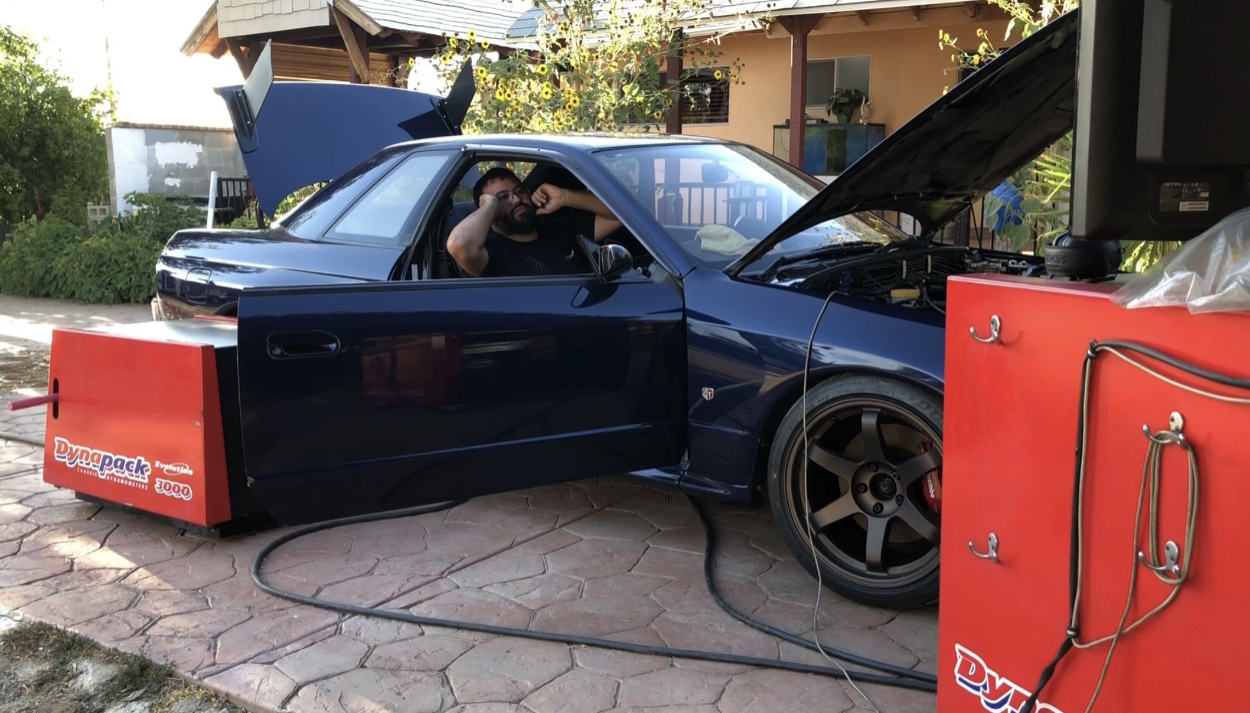
My name Juan Vargas and I started Bardabe Performance in November 2008, though I’d already been deep in engine management since 2006. I learned this the hard way, on my own S13 Silvia with an RB swap; where every mistake was mine to find and fix.
From 2008 to 2013 I worked mostly in AEM and Nistune, with Haltech and Apex’i Power FC mixed in. Those platforms aren’t history for me they’re still on the dyno regularly, and the years I put into them are why I can still move quickly on an older setup that a newer tuner would rather not touch.
In 2018 I started working with Link ECU regularly, and in 2020 I committed hard to Emtron alongside it. Both ECUs do the same fundamental job as everything else on the market, but their control strategies and fuel models sit clearly above most of the competition, and they’re where I’ve put the most hours since 2018.
Nearly two decades in, the honest summary is this: if it’s a standalone, I can tune it. Some platforms I know cold. Others I know well. I’ll tell you which bucket yours falls in before you spend a dollar.
Platforms I Tune
Specialty platforms where I do my best work
These are the systems I know at the level where I’m not reading menus while your engine is running. On a live tune, that matters more than almost anything.
- Link ECU: G4X, G4+, Thunder, Xtreme, Fury, Storm, Monsoon, Atom, and the plug-in range.
- Emtron: KV8, KV12, SL series, and the plug-in range.
- Apex’i Power FC: the OG. RB26, SR20, 2JZ, and the rest of the supported list. (In-person dyno tuning only, see the Power FC section below for why.)
Factory-certified
- AEM Infinity
- AEM EMS Series 2
Also supported regularly tuned, no learning curve on my end
- Haltech: Elite 750/1500/2000/2500, Nexus, and Platinum series
- Nistune: Type 1 through Type 4 daughterboards
Anything else
MoTeC, ECUMaster, Syvecs, FuelTech, MegaSquirt, Holley, ProEFI etc. if it’s a genuine standalone with logging and live-tuning capability, ask me. I’ll either take the job or tell you honestly that you’d be better served by a specialist in that platform. What I won’t do is take your money and learn on your engine.
What I don’t tune: factory ECUs. No stock OBD-II flash tuning, no handheld flashers, no canned maps.
Engines and Chassis I Know Best
My background is Japanese performance, and that’s still where I’m sharpest:
- Nissan Skyline: R32, R33, R34 RB20DET, RB25DET, RB26DETT
- Nissan Silvia / 240SX: S13, S14, S15 SR20DET & KA24DE(T)
- Toyota Supra / Soarer 1JZ and 2JZ.
That said, the engine matters more than the platform. Turbo or naturally aspirated, import or domestic, four-cylinder or V8, street car or dedicated race car. The process and the depth I bring to the software translate. I’ve tuned LS swaps, K-series, EJ/FA Subarus, BMW swaps, and plenty of one-off combinations. If you’re not sure your setup is a fit, ask me in a consultation and I’ll tell you straight.
What “Tuning” Is and What It Is Not
Let me kill the biggest misconception first.
A lot of people picture tuning like this: I email you a basemap, you flash it into your ECU, you go drive, you send me logs, repeat. That is not what I do.
Every minute of my remote tuning is live, over an AnyDesk screen-share, with you watching the screen. Basemap creation, initial setup, every single adjustment, you see it happen in real time on your laptop while your car runs in your garage or shop. There’s no black box and no “trust me, I changed some stuff.” If a value in your tune moves, you watched me move it, and we’re talking it through on a call the whole time.
Why work this way? Because every car has quirks. The copy-and-paste approach assumes your build is identical to a thousand others, and it isn’t. Your wiring, your sensors, your fuel system, the specific way your engine behaves all of that has to be discovered, not assumed. The only honest way to do that is live.
Is Remote Setup + Dyno as Good as In-Person Tuning?
Honestly? In most ways I think it’s better and here’s the reasoning, not just the claim.
Doing the initial setup remotely lets us confirm pin-outs, sensor calibrations, engine health, and every variable that could go sideways before your car ever touches the dyno. That saves expensive dyno time, and you learn your own car in the process.
For years, the pattern was the same: a customer would show up to the dyno with what they were sure was a finished build, only for me to find repairs that had to happen before we could tune a thing. Wasted dyno time, wasted transport, a rushed afternoon, and a let-down customer. Since switching to this process remote prep first, in-house dyno second. I’ve watched customer experience, dyno efficiency, and total cost all improve at once.
That said, I’ll be straight: this isn’t for everyone. If you genuinely struggle with basic wrench work, reading a wiring diagram, swapping a sensor or chasing a fault, the process gets hard. If your internet is unstable, live tuning falls apart fast. I cover both honestly further down.
If the remote portion isn’t a fit, that’s fine you can book straight to dyno day. Bring a running, sorted car and we’ll tune it in person like any conventional dyno shop. You’ll just risk paying for dyno time to fix things we could have caught for free beforehand.
Apex’i Power FC: In-Person Dyno Tuning Only
The Power FC gets its own section because it works differently, and I’d rather explain that than let you book the wrong thing.
The Power FC is a great ECU that’s outlived most of its contemporaries, and I still enjoy tuning them. But it predates the architecture the rest of this article is built around. There’s no free PC software with live screen-shared editing the way PCLink or EMTune offer. There’s no integrated wideband input, no flex-fuel input, no oil-pressure or fuel-pressure protection strategies. The safety net that makes my remote-first process safe simply doesn’t exist on this platform.
So Power FC tuning is in-person, on my dyno, start to finish. You bring me a running car, we tune it on the Dynapack, you take it home. That’s the only honest way to do it.
A few things to know before you book:
- Bring the car running and driveable.
- A wideband bung is required. I have shop equipment, but I need to be able to install it easily for your dyno session.
- Power FC has no engine protection. I tune them conservatively as a result, and I’ll tell you plainly if I think your combination has outgrown the ECU.
If you’re running big power or serious boost on a Power FC, I’ll usually recommend a Link or Emtron upgrade not to sell you an ECU, but because the protection features genuinely save engines.
My Tuning Process, Step by Step
This is the full flow, from your engine’s first start through the dyno and the validation drives after it. You book and pay for each phase as you reach it. There’s no single large package to commit to up front. Most customers run them in order, because each one makes the next one shorter and cheaper, but you’re never paying for a stage you haven’t got to yet. If you only want help through the early phases and plan to use a local dyno for the final pulls, that works too.
This process applies to Link, Emtron, Haltech, AEM, Nistune and other live-tunable standalones. Power FC customers go straight to Phase 4.
Phase 1: Wiring & Setup Consultation
Start here, not at the end.
This is the most underused part of the package, so I’m putting it first on purpose. Plenty of people think the car has to be 110% finished before they’re “allowed” to talk tuning. That’s backwards. I want to be in the loop before the car is done. Wiring questions, sensor selection, ECU configuration, harness routing all of it is fair game. Catching a wiring mistake before you wrap the harness is a thousand times easier than finding it after the engine won’t start.
To be clear about the boundary: this is consultation and guidance, not labor. I’ll tell you exactly what to do and why. You or your builder do the work.
Phase 2: Engine First Start
This is where I get the car ready for its first real driving session. I get push-back from people whose cars “already run”. This session isn’t about whether your engine can technically start. It’s about me learning your car, getting my settings into your base-map, and enabling every safety feature your sensors allow. A running car is the starting line, not the finish.
What we actually do:
- Get the engine firing and idling stably
- Verify every sensor reads correctly
- Confirm the cooling fans cycle when they should
- Make sure it restarts hot
- Run a 30-second 3,000 RPM hold to validate initial fueling
- Arm all available engine protection knock detection, fuel-pressure protection, oil-pressure protection, lambda safety cuts, whatever your sensor set supports
Sometimes these sessions end early and not because anything went wrong on my end. A sensor turns out miswired, we can’t build oil pressure, the cooling system wasn’t fully bled. These come up on basically every build, and finding them now is a win, not a failure. I’ll help identify the fix and send you off with a clear task list for next time.
This phase usually runs a single one-hour session, booked through my scheduling system.
Phase 3 : Dyno Prep & Driving Sessions
Once the car is alive and the safety net is armed, we hit the road. The goal is getting it dyno-ready: clean pulls with no hiccups, boost rising and stabilizing, then boost control activated and verified to add a predictable amount when commanded. The whole time we’re validating the fuel system under real load, fuel pressure holding steady, injector duty cycle landing where it should.
This is also where I give you the single most important piece of practical advice on this page:
Set up a stable home base for your live sessions. If you try to live-tune over a mobile hotspot in a parking lot, you’re going to have a bad time. The connection drops, my live edits stall, and we burn an hour fighting bandwidth instead of tuning. The workflow that works: drive out, capture your log on the road, then come home. wired ethernet ideally, strong Wi-Fi at minimum and we review the log live together. The connection can drop while you’re driving; that’s fine. The connection cannot drop while we’re editing your tune. If you absolutely must use a hotspot, you need full 5G with five bars. Starlink is highly recommended.
This phase typically runs one to three sessions.
Phase 4: Dyno Day (In-House Hub Dyno)
This is where my in-house Dynapack AWD hub dyno earns its keep and I want to be specific about what it’s for, because people assume the dyno is about chasing a horsepower number. It isn’t.
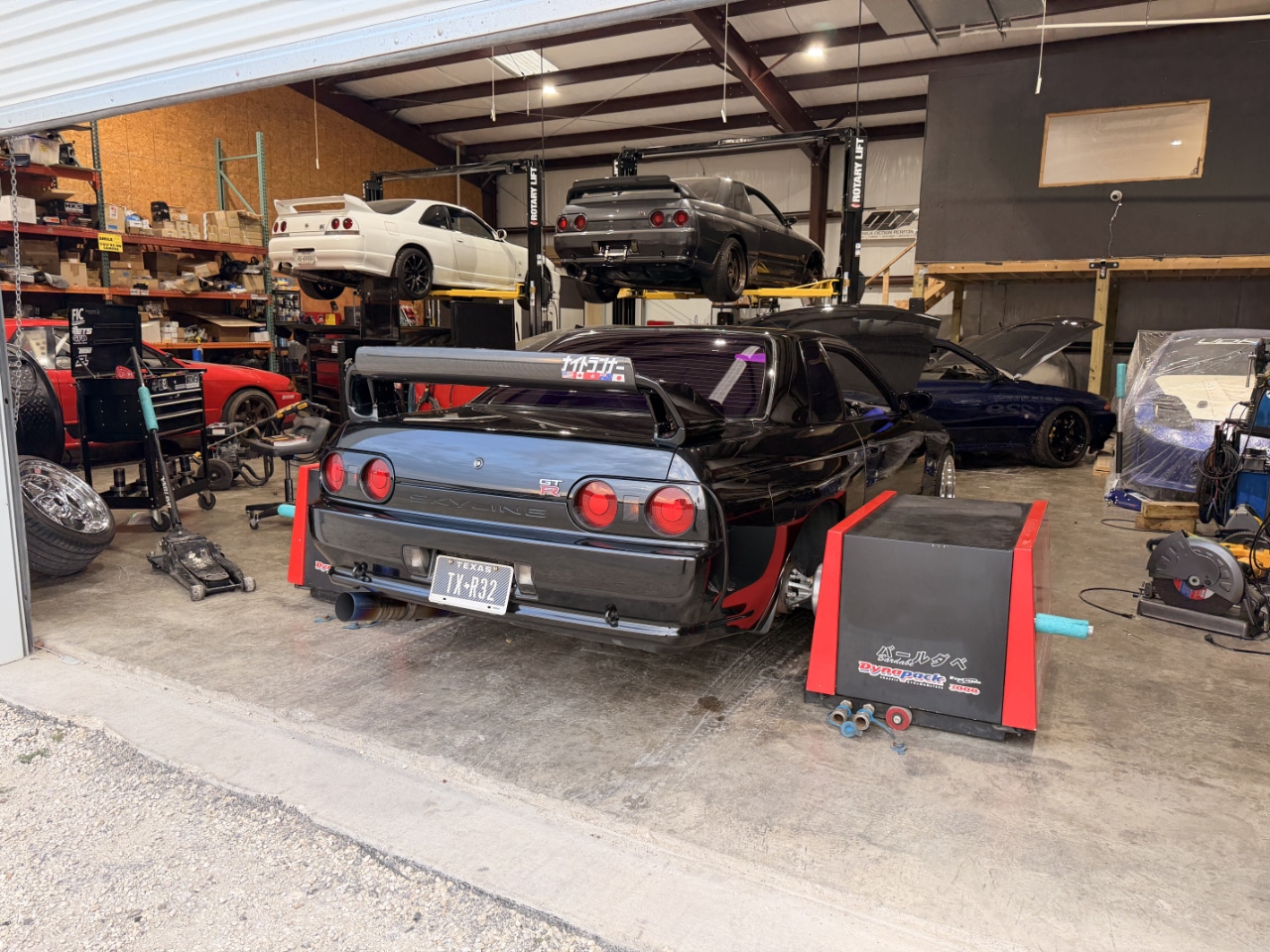
The dyno is a tool to confirm engine health and optimize the calibration under conditions we can’t safely create on the street: sustained high-RPM, high-load operation; repeatable, controlled pulls; real load on the engine long enough to see how it truly behaves.
The horsepower figure is the byproduct. The point is making sure your engine is doing exactly what you and I think it’s doing. Because the car arrives already running and protected, dyno day is efficient instead of a scramble.
Why a hub dyno: the Dynapack bolts directly to your hubs instead of spinning your tires on a roller. No wheelspin, no strap drama, no tire slip corrupting the data, and repeatable load control that lets me hold a specific RPM and load point for as long as I need. On any car it’s the difference between real data and educated guessing.
Phase 5: Post-Dyno Validation Drives
A car that’s perfect on the dyno isn’t automatically perfect on the street. Throttle transitions feel different, ambient conditions vary. So after the dyno we go back to the road and confirm two things: nothing trips engine protection in normal driving, and any transient throttle issues get cleaned up. Your car comes home tuned, validated, and genuinely trustworthy.
What About Dedicated Race Cars?
If your car is a true race car not street-legal, not driven on public roads. The process flexes a little. We still do Phase 1 and Phase 2 exactly the same way. From there we skip Phase 3 (no street driving) and go straight to Phase 4 on the dyno. Phase 5 then happens at your next track day or test session.
Scheduling works the same: once your first session is done and I’ve cleared you for the dyno, you can book a dyno day on the next open date. The system holds a 24-hour minimum lead time; otherwise you set the pace.
What You’ll Need on Your End
For remote tuning (Link, Emtron, Haltech, AEM, Holley, Nistune, and similar)
- A standalone ECU with live-tuning capability and its software installed on your laptop
- A wideband O2 sensor integrated into the ECU non-negotiable, no exceptions. A gauge-only wideband the ECU can’t read is not enough.
- A Windows 10 or 11 laptop, x64 processor (ARM isn’t supported by most ECU software yet), 8 GB RAM minimum, 16 GB recommended
- A stable internet connection, ethernet is best, full Wi-Fi is fine, a full-bars 5G hotspot is the absolute floor
For in-person dyno day only (including all Power FC work)
- A running, drivable car
- A functional wideband
- Fluids fresh, no known leaks, no unresolved mechanical faults
Sensors beyond the wideband
| Sensor | Status |
| Knock sensor | Required for any car |
| Flex-fuel sensor | Required for any car running ethanol-blended fuel |
| Fuel-pressure sensor | Highly recommended. the single most useful diagnostic sensor for catching strange running issues |
| Oil-pressure sensor | Recommended for engine protection, not required |
| EGT sensors | Generally only recommended for race cars, where long WOT durations make thermal strategies useful |
Power FC exception: this ECU can’t read most of these. That’s the tradeoff, except for the knock sensor.
If you’re missing something on the required list, that’s the first thing we’ll sort out before booking. On the fence about an optional one? I’m happy to talk through whether it’s worth the install for your specific build.
My New Process vs. the Traditional way: the Honest Cost Conversation
I’m not going to throw numbers at you here current pricing lives on the tuning services page. But I do want to address cost head-on, because it’s where remote service gets most misunderstood.
Under the old model, when you brought your car in for a dyno tune, you paid for the tune, that’s it. If the car shows up with problems (bad sensor, leaky boost reference, unstable fuel pressure, anything), I would have to diagnose it, fix it, and bill you separately. You leave with two invoices: one for the tune, and a second, often the bigger one, for everything I had to fix to make the tune possible.
My new process is structured differently. The wiring guidance, the first-start session, and the diagnostic work are part of sessions you already booked. When I find a problem, I tell you what it is and how to fix it. You learn your car, you save the labor cost, and by the time we reach the dyno the car is genuinely ready.
That’s the real comparison. Not “Bardabe’s price vs. X shop’s price,” but “Bardabe’s price including setup support vs. X shop’s price plus whatever they have to fix when you arrive.”
Is This Process Right for You? The Honest Verdict
It works incredibly well for most people, but I’d rather be straight than oversell.
Who it’s not for:
- If you can’t or don’t want to do basic automotive work yourself like turning wrenches, swapping a sensor, chasing a wiring fault you’ll struggle with the remote process. In that case, have your shop get the car sorted and bring it to me finished. I’ll be happy to tune it.
- If your home internet is genuinely bad and you can’t get to a stable connection anywhere, live remote tuning won’t work for you. Dyno day still will.
- If you’re looking for someone to build the car, I’m only doing 2 or 3 special projects per year now that’s for another section. This is for Tuning only.
For everyone else DIY builders, garage-built track cars, dedicated street cars, race teams without a tuner on staff, and shops that need a tuner they can hand a finished car to. This process consistently delivers a finished, validated tune for less total cost than the traditional route, and teaches you something about your own car along the way.
Serving Kyle, Austin, San Antonio & Central Texas
Bardabe Performance is based at 395 County Road 202, STE 5A, Kyle, TX 78640 right on the I-35 corridor between Austin and San Antonio, so the in-house Hub dyno is an easy drive for most of Central and South Texas.
- Austin dyno tuning about 25 to 30 minutes south; an easy same-day trip.
- San Antonio dyno tuning roughly an hour north, a straight shot up I-35.
- Nearby cities I regularly tune for Buda, San Marcos, New Braunfels, Seguin, Round Rock, Cedar Park, Georgetown, Pflugerville, Lockhart, and the rest of the Austin to San Antonio corridor.
- Houston & Dallas We do all the setup and prep work live, then you make a single, well-planned trip to the dyno with a car that’s already running, protected, and ready instead of hauling a half-finished project across the state and hoping.
And if you’re outside Texas entirely, the remote side of my process works anywhere with a stable connection. You’ll have to coordinate with your local dyno for the final pulls when an in-person visit isn’t practical.
Shop hours: Monday to Friday, 10 AM to 6 PM Central Time. There’s no phone number on the site by design. Reach out to me by email to start, and you’ll get a direct number when you book.
Frequently Asked Questions
What ECUs do you tune?
Any standalone engine management system. My specialty platforms are Link ECU, Emtron, and Apex’i Power FC. I’m factory-certified on AEM Infinity and AEM EMS Series 2, and I regularly tune Haltech and Nistune. MoTeC, ECUMaster, Syvecs, FuelTech, MegaSquirt, Holley, and others ask me and I’ll tell you honestly whether I’m the right tuner for it.
Do you tune Haltech?
Yes. Elite 750, 1500, 2000, 2500, Nexus and Platinum series, both remotely and on my in-house hub dyno.
Do you tune AEM?
Yes, I’m factory-certified on AEM Infinity and AEM EMS Series 2, and AEM was one of the first platforms I worked on when I started tuning in 2006.
Do you tune Apex’i Power FC?
Yes, and it’s one of my specialty platforms. Power FC tuning is in-person only on my dyno in Kyle, Texas, because the platform doesn’t support the live remote screen-share workflow or the engine-protection sensors my remote process depends on. Bring me a running car and we’ll tune it start to finish in one visit.
Do you tune Link ECU or Emtron?
Yes they’re my two deepest platforms. I work in PCLink and EMTune daily on customer cars, which is exactly why I can move quickly and safely while your engine is running.
How does your complete tuning process work?
It’s a blend of live remote tuning and in-person dyno tuning. We handle wiring guidance, first start, safety setup, and road prep remotely over live screen-shared sessions, then finish the calibration on my in-house hub dyno in Kyle, Texas. You can also book a straight in-person dyno day if your car is already sorted.
Is remote tuning safe for my engine?
Yes, arguably better than rushing a half-prepped car onto a dyno. I enable every engine-protection feature your sensors support (knock, fuel pressure, oil pressure, lambda safety cuts) during the first-start session, before we ever make power.
Do I have to bring my car to Kyle, Texas?
For the full package with my dyno, yes but only once, at the end, with a car that’s already running and validated. From Austin or San Antonio that’s an easy day trip. From Houston or Dallas it’s a single planned visit. If you can’t travel, I can do the remote portion but you’ll have to coordinate with a dyno near you.
What do I need to tune remotely?
A standalone ECU with an integrated wideband, a Windows 10/11 laptop (x64, 8 GB RAM minimum), and a stable internet connection. Ethernet or strong Wi-Fi preferred. Full sensor requirements are listed above.
What does dyno-only tuning cost?
Pricing for each session, and for dyno-day-only, is on my tuning services page. Because setup support and diagnostics are included, most customers spend less overall than a shop tune plus the fixes a shop bills separately.
How do I book and pay?
Everything is booked on my tuning services page, pick the session you need, pay for it, and choose your time slot on my calendar. There’s a 24-hour minimum lead time; otherwise you set the pace. Once we’ve gone over your build in that first session, you can book dyno time.
Ready to Get Your Car Tuned?
If you made it this far, you’ve probably got a build in mind and a question or two. The fastest way forward is to book a free 30-minute consultation we’ll go over your car, your ECU, your goals, and what’s realistic, and you’ll walk away knowing exactly what your path looks like.
I won’t claim to be the best tuner alive. What I’ll claim is that I show up, I do the work, and I get a little better at it every day. If you’re looking for a standalone ECU tuner serving Kyle, Austin, San Antonio, Houston, and Dallas who’ll treat your build like it’s my own you know where to find me.
— Juan, Bardabe Performance